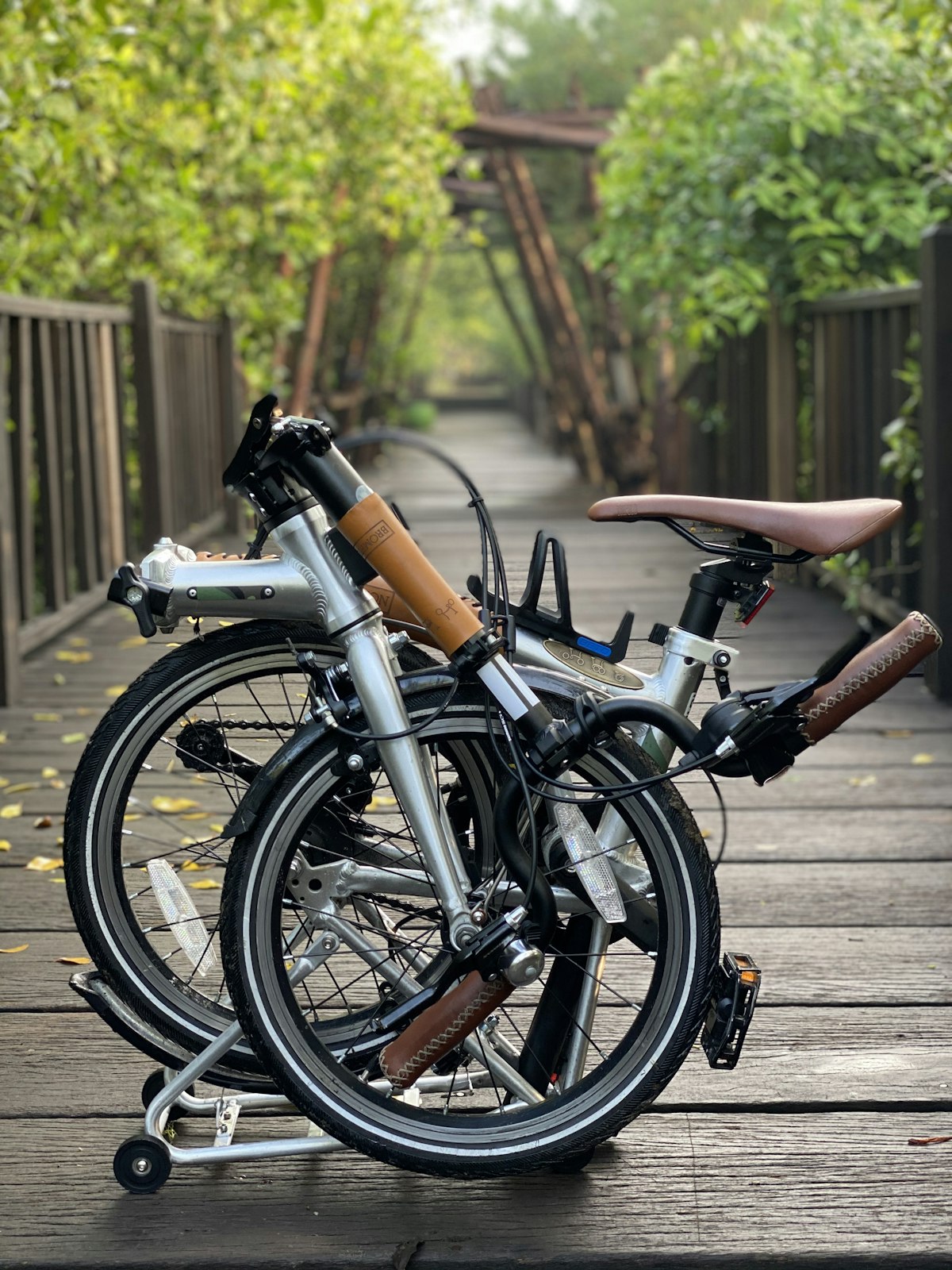
How to choose a folding bike
Folding bikes vary wildly in size, weight, ride quality, and price. This guide cuts through the noise and tells you what actually matters based on how you'll ride.
The two questions that matter most
Before diving into specs, answer these:
- How far is your ride? Under 3 miles, almost any folder works. Over 5 miles, you need bigger wheels and more gears.
- How often do you fold? If you fold 4+ times per day (home → station → station → office), fold size and speed are critical. If you fold once a week, they barely matter.
Everything else (weight, gears, brakes, brand) flows from these two answers.
Wheel size
This is the single biggest decision. Wheel size determines ride quality, fold size, and speed. Here's the tradeoff:
| Wheel size | Ride quality | Fold size | Speed | Best for |
|---|---|---|---|---|
| 16" | Bumpy on rough roads | Very compact | Slower cruising | Transit commuters, travel |
| 18" | Good compromise | Compact | Moderate | All-rounders |
| 20" | Smooth, confident | Medium | Near full-size feel | Longer commutes, rough roads |
| 24" | Very smooth | Large | Fast | Performance, touring |
Our recommendation: 20" wheels for most people. They ride well, fold reasonably small, and handle real-world road conditions. Go 16" only if fold size is your absolute top priority (daily transit commuters in crowded cities).
Weight
Weight matters more on a folding bike than a regular bike, because you carry it. Not just ride it, carry it. Up stairs. Onto trains. Through turnstiles. Into your apartment.
- Under 22 lbs: ultralight. Easy to carry anywhere. Premium price.
- 22 – 26 lbs: the sweet spot. Manageable for most people.
- 26 – 30 lbs: noticeable when carrying. Fine if you don't carry far.
- Over 30 lbs: heavy. Only acceptable for e-bikes or if you rarely carry it.
Every pound matters when you're hauling a bike up subway stairs at 7:45 AM. If you'll carry yours frequently, prioritize weight, even if it costs more.
Fold type and speed
There are three main fold mechanisms:
- Mid-fold (most common): the frame hinges in the middle. Simple, reliable, used by Dahon, ZiZZO, and most brands. 15–30 seconds.
- Tri-fold (Brompton): the rear triangle folds under, then the front folds over. Produces the smallest package. ~15 seconds with practice.
- Breakaway/vertical: the bike folds vertically, often with the wheels beside each other. Used by Birdy and some Tern models. Compact but can be heavier.
Fold speed is mostly about practice. Any fold mechanism becomes fast once you've done it 50 times. Focus on the folded size rather than the fold speed when choosing.
Gearing
How many gears do you need?
- Single speed: flat cities only. Lightest and cheapest.
- 3-speed (internal hub): enough for gentle hills. Low maintenance.
- 7–8 speed: the sweet spot for most commuters. Handles moderate hills.
- 11+ speed: for hilly cities or longer rides. Performance territory.
Internal hub gears (like Shimano Nexus) are popular on folders because they're low-maintenance and you can shift while stopped, handy at traffic lights. Derailleur gears give you more range but are more exposed to damage during folding.
Brakes
Three options:
- V-brakes (rim brakes): light, cheap, adequate in dry conditions. Weak in rain.
- Mechanical disc brakes: consistent in all weather. Slightly heavier. Mid-range bikes.
- Hydraulic disc brakes: the best stopping power. Premium bikes only.
If you ride in rain regularly, disc brakes are worth the weight penalty. In dry climates, V-brakes are fine.
Budget guide
A functional folder that handles casual commutes. Components will be basic but serviceable. Weight around 27–30 lbs.
Examples: ZiZZO Liberte, Schwinn Loop
The sweet spot for most commuters. Noticeably better ride quality, lighter weight, and more reliable components.
Examples: Dahon Mariner D8, Tern Link B7
This is where folding bikes get genuinely good. Lighter, smoother, and more durable. You'll keep this bike for years.
Examples: Brompton C Line, Tern Verge N8
Performance folders that rival full-size bikes. Ultralight builds, suspension, electronic shifting, or pedal-assist motors.
Examples: Tern Verge X11, Birdy GT, Brompton P Line
Electric or not?
Electric folding bikes add 5–15 lbs and $500–$2,000 to the price. They're worth considering if:
- Your commute is hilly
- You want to arrive without sweating
- Your ride is over 5 miles
- You have physical limitations that make pedaling hard
The downside is weight. A 35 lb e-folder is fine to ride but brutal to carry up stairs. If your commute involves lots of carrying, a lighter non-electric folder might actually be faster door-to-door.
Test ride if you can
Specs only tell you so much. If there's a dealer near you, ride the bike. Fold it yourself. Carry it up a flight of stairs. The best folding bike is the one that feels right in your hands and under your feet, not the one with the best spec sheet.
Ready to pick one?
See our tested recommendations in the best folding bikes of 2026 guide. Curious about the two biggest brands? Read Brompton vs Dahon. Already decided and planning your commute? Check the commuting guide.